Advanced Thermal Oxidation Systems: An Engineering Review of HICLOVER Waste Incinerator Technology
Advanced Thermal Oxidation Systems: An Engineering Review of HICLOVER Waste Incinerator Technology
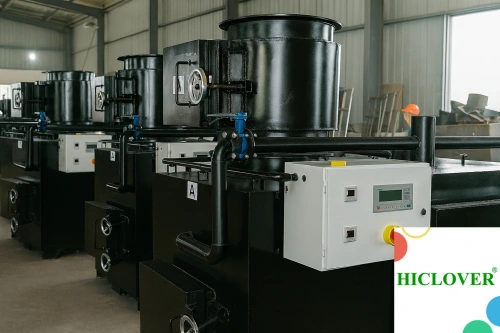
The controlled thermal destruction of waste is a critical engineering discipline, essential for managing hazardous, medical, and general solid waste streams in compliance with stringent environmental regulations. A modern **HICLOVER waste incinerator** represents a highly engineered system designed for maximum destruction efficiency and minimal environmental impact. The operational efficacy of these systems is predicated on precise control of temperature, combustion air, and gas residence time, adhering to international benchmarks such as those set by the World Health Organization (WHO). For engineers and technical professionals, understanding the core principles behind a **HICLOVER waste incinerator** is fundamental to its correct specification and deployment. The system’s engineering reliability is built upon achieving specific **medical incinerator operating temperature standards**, often requiring a primary chamber operating between 650-850°C for pyrolysis and a secondary chamber exceeding 1000°C to ensure the complete destruction of volatile organic compounds and pathogens.
Core Engineering Principles of Dual-Chamber Thermal Oxidation
The fundamental process governing modern **waste incinerators** is multi-stage thermal oxidation, most effectively executed within a dual-chamber configuration. This design segregates the initial combustion phase from the secondary gas-phase destruction, allowing for precise control over each stage to optimize performance and minimize harmful emissions. This approach is a cornerstone of advanced thermal treatment and is central to meeting the increasing pressures of both **ESG compliance** and public health mandates. HICLOVER, as an experienced manufacturer, has refined this process over more than 16 years, embedding these principles into every system produced in their factory. This engineering depth ensures that the equipment not only meets but often exceeds regulatory requirements for the destruction of complex waste streams, from pathological tissues to industrial plastics.
The Primary Combustion Chamber: Pyrolysis and Gasification
The primary chamber of a **HICLOVER waste incinerator** functions as a robust gasifier. It is here that solid waste is introduced and subjected to a sub-stoichiometric (starved-air) environment at temperatures typically ranging from 650°C to 850°C. This controlled introduction of oxygen prevents complete combustion, instead promoting pyrolysis and gasification. During this phase, the solid waste is thermally decomposed into a mixture of combustible gases (syngas), volatile organic compounds (VOCs), and a solid residue of inert ash and carbon char. The primary chamber’s design prioritizes durability, often featuring high-alumina refractory lining capable of withstanding thermal shock and chemical attack from diverse waste materials. The controlled, lower-temperature environment minimizes the formation of nitrogen oxides (NOx) and reduces the entrainment of particulate matter into the gas stream, setting the stage for more efficient secondary treatment. This process is the first critical step in transforming solid hazardous material into a manageable gas stream.
The Secondary Combustion Chamber: Complete Gas Destruction
Gases produced in the primary chamber are directed into the secondary chamber, or afterburner, which is engineered for the complete destruction of all remaining pollutants. This chamber operates at significantly higher temperatures, typically maintained between 1000°C and 1200°C, and with an excess of air to ensure full oxidation. The design of this chamber is governed by the “Three T’s” of effective combustion: Temperature, Turbulence, and Time. High temperatures provide the necessary activation energy to break down stable compounds like dioxins and furans. Turbulence, induced by strategically placed air injection nozzles and baffles, ensures intimate mixing of the combustible gases with oxygen. This turbulent flow eliminates pockets of unburnt gas, guaranteeing that all constituents are exposed to the extreme oxidative conditions. The combination of these factors results in the conversion of harmful organic compounds into relatively benign components, primarily carbon dioxide (CO2), water vapor (H2O), and acid gases that can be subsequently treated. This high-temperature phase is non-negotiable for treating infectious medical waste and other hazardous materials.
Incinerator residency time and Its Critical Role in Dioxin/Furan Destruction
A critical parameter in the secondary chamber’s design is the **Incinerator residency time**, which refers to the duration that combustion gases are held at the required high temperature. International standards, including the EU’s Waste Incineration Directive (now the Industrial Emissions Directive), mandate a minimum gas residence time of two seconds at a temperature of at least 850°C (or 1100°C for waste with high halogenated organic content). HICLOVER systems are engineered to meet or exceed this two-second benchmark, ensuring that even the most persistent organic pollutants are fully mineralized. This extended duration provides sufficient time for complex chemical reactions to proceed to completion, effectively destroying dioxins, furans, and other toxic compounds. Proper residency time is a direct function of chamber volume and gas flow rate, parameters that are carefully calculated by engineers during the design phase to match the specific capacity and waste type the incinerator will handle, directly contributing to **carbon emission reduction pressure** by ensuring cleaner, more complete combustion.
System Design and Configuration: From Fixed to Mobile Deployments
The versatility of modern **waste incinerators** is reflected in their diverse configurations, which are engineered to meet specific operational and logistical challenges. The choice between a permanently installed fixed system and a transportable containerized unit depends heavily on the application’s context, from established urban hospitals to rapidly deployed field clinics in **crisis zones & humanitarian camps**. Similarly, the level of automation and the type of flue gas treatment are critical design decisions that impact operational efficiency, compliance, and total cost of ownership. HICLOVER’s role as a direct **incinerator manufacturer** allows for deep customization across these variables, providing solutions that are precisely tailored to client needs rather than offering one-size-fits-all products. This flexibility is crucial for successful projects in regions with developing infrastructure or unique logistical constraints.